Knee Replacement Surgery Bangalore

Knee Replacement Surgery: Regain Mobility and Live Pain-Free
Chronic knee pain can severely limit daily activities such as walking, climbing stairs, or even standing for extended periods. When non-surgical treatments like medication, physiotherapy, or lifestyle changes no longer provide relief, knee replacement surgery offers a reliable and long-lasting solution. With modern surgical techniques and advanced facilities, knee replacement surgery Bangalore has become a preferred choice for patients seeking world-class care and faster recovery.
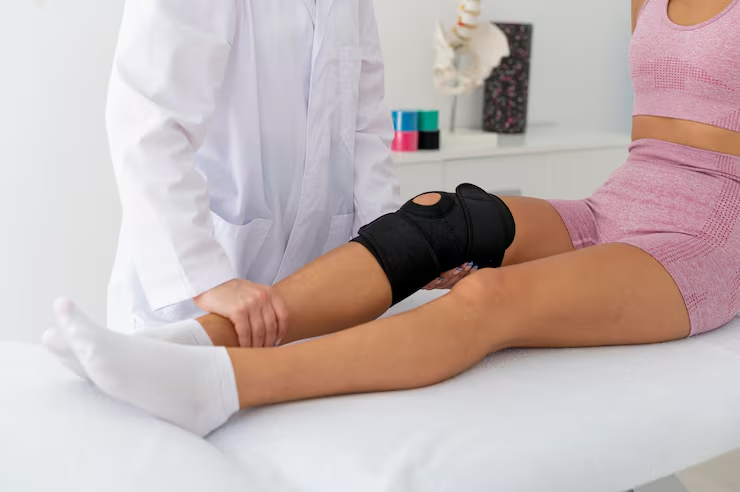
What Is Knee Replacement Surgery?
Knee replacement surgery, also known as knee arthroplasty, is a procedure where damaged parts of the knee joint are replaced with artificial components (implants). These implants are designed to mimic the natural movement of the knee, relieve pain, and restore function.
This surgery is commonly recommended for:
- Osteoarthritis – age-related cartilage wear and tear
- Rheumatoid arthritis – inflammation leading to joint damage
- Post-traumatic arthritis – after fractures or injuries
- Knee deformities that affect mobility and comfort
By opting for knee replacement surgery Bangalore, patients benefit from advanced medical infrastructure and experienced orthopedic surgeons skilled in modern knee replacement techniques.
Types of Knee Replacement Surgery
Depending on the severity of damage and the patient’s condition, different types of knee replacement procedures are available:
- Total Knee Replacement (TKR): The most common procedure, where both sides of the knee joint are replaced with implants.
- Partial Knee Replacement (PKR): Only the damaged portion of the knee is replaced, preserving healthy bone and cartilage. Suitable for early-stage arthritis.
- Robotic-Assisted Knee Replacement: Uses robotic technology to plan and execute the surgery with greater precision and minimal soft tissue damage.
- Revision Knee Replacement: Performed when a previous implant wears out or fails and needs replacement.
Your orthopedic specialist will recommend the best option after evaluating your knee condition, age, lifestyle, and medical history.
Why Knee Replacement Surgery Is Done
Knee replacement is usually advised when:
- Pain persists despite medication and physiotherapy
- Knee stiffness limits daily movements
- Deformities such as bow legs or knock knees develop
- Pain interferes with sleep and overall quality of life
- X-rays show advanced joint degeneration
The primary goals are to relieve pain, correct deformities, and restore joint function, allowing patients to lead more active and independent lives.
How the Procedure Is Performed
Knee replacement surgery is typically done under spinal or general anesthesia. The steps include:
- Incision: A precise incision is made over the knee to access the joint.
- Removal of Damaged Tissue: The worn-out cartilage and bone are removed.
- Implant Placement: Artificial components made of metal and high-grade plastic are positioned to mimic natural knee movement.
- Closure: The incision is closed, and a dressing is applied.
The surgery usually takes 1–2 hours, and most patients can start walking with support within a day.
Recovery and Rehabilitation
Recovery after knee replacement is crucial for achieving the best results. A structured physiotherapy program starts soon after surgery to regain strength and mobility.
Typical Recovery Timeline:
- Day 1–2: Walking with support and gentle knee exercises
- Weeks 2–6: Gradual increase in movement and strengthening
- Weeks 6–12: Return to most daily activities with improved mobility
- 3–6 months: Full recovery with minimal pain and improved function
Most patients can resume normal activities, including travel and moderate exercise, within a few months.
Benefits of Knee Replacement Surgery
- Significant pain relief and reduced stiffness
- Improved mobility and ability to perform daily tasks
- Correction of deformities like bow legs or knock knees
- Long-lasting results, with implants lasting 15–20 years or more
- Enhanced quality of life and return to active living
With expert care and modern facilities, knee replacement surgery Bangalore offers excellent outcomes and faster rehabilitation.
Why Choose Knee Replacement Surgery in Bangalore
Bangalore has become a leading destination for orthopedic care due to its blend of skilled specialists and advanced medical technology. Patients choosing knee replacement surgery Bangalore benefit from:
- Highly experienced orthopedic surgeons trained in advanced knee replacement techniques
- Modern hospitals equipped with robotic and minimally invasive systems
- Personalized treatment plans tailored to each patient
- Comprehensive pre- and post-surgery rehabilitation
- Affordable and world-class care compared to many metro cities
This combination of expertise, technology, and accessibility makes Bangalore a trusted center for knee replacement procedures.
When to Consult a Specialist
You should consult an orthopedic surgeon if you experience:
- Persistent knee pain that limits mobility
- Difficulty walking, standing, or climbing stairs
- Night pain that interferes with sleep
- Joint deformities or instability
- X-ray or MRI evidence of advanced knee damage
Early consultation allows timely intervention, leading to better surgical outcomes.
Final Thoughts
Knee replacement surgery is a proven, life-changing solution for patients suffering from chronic knee pain and functional limitations. With experienced surgeons, advanced technologies, and comprehensive rehabilitation, knee replacement surgery Bangalore provides patients with world-class orthopedic care and improved quality of life. If knee pain is affecting your daily routine, consulting a specialist could be the first step toward lasting relief and mobility.